Protein, Strength, and Healthy Ageing for Women: What Actually Matters
Why regular protein intake and resistance training are two of the most powerful investments women can make in future function.

Healthy ageing is not just about adding years. It is about keeping enough strength, muscle, steadiness and bone to live those years well. That conversation starts much earlier than most women realise.
Protein is a daily signal, not a wellness trend
For many women, aiming for around 1 gram of protein per kilogram of body weight per day is a sensible, practical starting point. It is not a magic number, and some women will need more depending on age, training, appetite, recovery or body composition goals. But it is a much more useful benchmark than the low-protein patterns that quietly become normal for many women.
Protein is not only about hitting a total by bedtime. It works best when it is spread across the day. A woman who has very little protein until dinner is asking her body to do a lot of repair and maintenance with very little building material for most of the day.
Why protein needs often change as we get older
As muscle ages, it becomes less responsive to the usual anabolic stimulus of food. This is called anabolic resistance. In simple terms, the same meal that once helped stimulate muscle protein synthesis may have less effect later in life unless total intake, meal distribution and training stimulus are good enough.
That is one reason protein needs often increase with age rather than decrease. Older women are not being difficult when they struggle to maintain strength. Their physiology is asking for a clearer, stronger signal.
Sarcopenia does not begin the day you become “elderly”
Sarcopenia - the age-related loss of muscle mass and function - develops gradually over time. Women may notice it first as reduced strength, poorer recovery, less stability, or the sense that they are becoming softer without changing much else.
That is why muscle deserves attention before visible decline becomes obvious. Strength is easier to preserve than to rebuild from scratch after years of drift.
Why resistance training changes the conversation
Protein is necessary, but food alone is not enough. Muscles respond best when they are asked to do something. Resistance training provides that signal. It tells the body that muscle is still needed and worth maintaining.
It does not have to look dramatic. Bodyweight work, dumbbells, kettlebells, machines, bands and well-structured reformer work can all create useful loading. The principle matters more than the aesthetic. Challenge the muscle, recover well, repeat consistently.
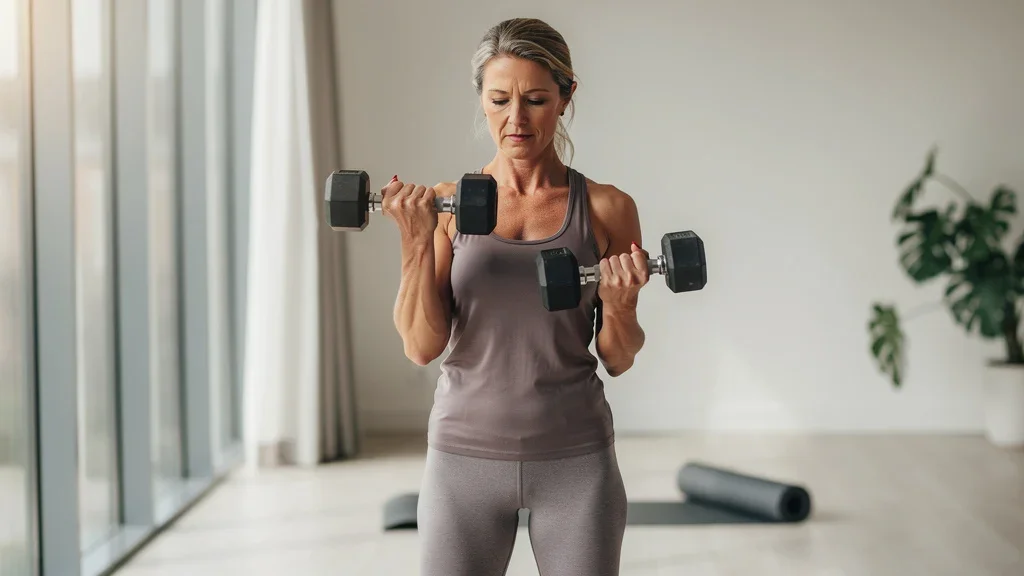
The muscle-bone connection matters more than most women are told
Muscle and bone are in constant conversation. When muscles pull on bone, bone responds to loading. That means resistance training supports not only strength and body composition, but also skeletal health.
This matters especially for women approaching or beyond menopause, when bone loss becomes more relevant. A body that is strong enough to lift, carry, climb, balance and get up from the floor is not just fitter. It is more resilient.
What actually matters most
Not a complicated supplement stack. Not punishing cardio. Not waiting until weakness appears. The basics still win: eat enough protein consistently, train with resistance regularly, challenge the body progressively, and give recovery the respect it deserves.
Every meal and every strength session is a vote for future function. That is one of the most empowering parts of this whole conversation: women have real leverage here. You can build your future strength now.
What to do this week
Start by checking whether each main meal contains a genuine protein source, not just a hopeful sprinkle.
Distribute protein across the day instead of trying to rescue the total at dinner.
Add resistance training two or more times per week if you are not already doing it.
Remember that strength is a health marker, not just a gym goal.
If you want support building a more realistic plan for protein, strength and healthy ageing, you do not have to guess your way through it. You can book a consultation and we can create something practical, evidence-informed and actually sustainable.
This article is for educational purposes and is not a substitute for personalised medical advice, diagnosis or treatment. If you have a medical condition, significant symptoms or are taking medication, individual guidance matters.